
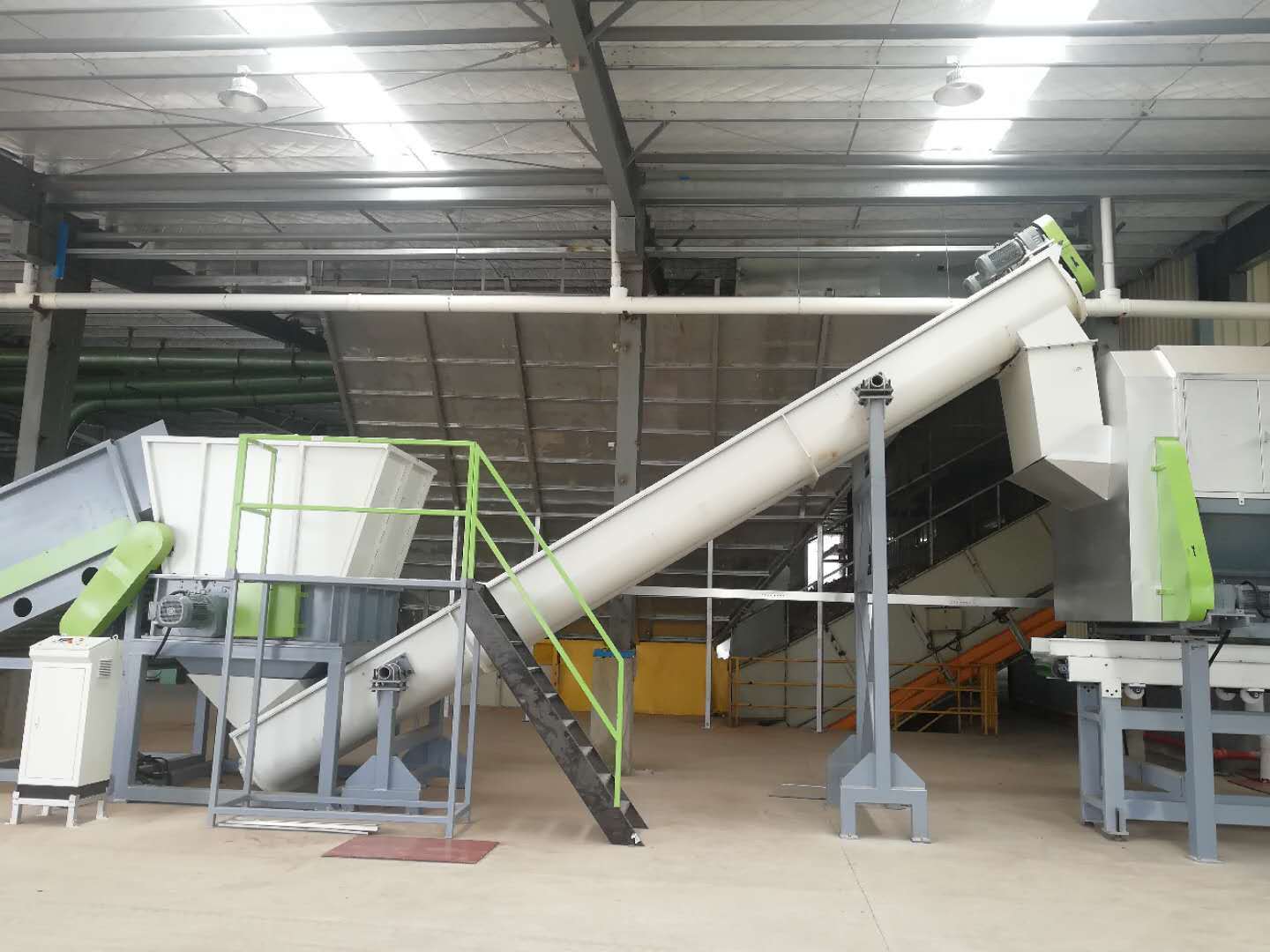
PET bottle washing line 2tons per hour
Case Study: 2 TPH Food-Grade PET Bottle Washing Line at Guangxi Guolong Group
Executive Summary
In 2022, a state-of-the-art 2-ton-per-hour PET bottle washing line was successfully commissioned and put into stable operation at Guangxi Guolong Group. This advanced line consistently produces high-quality recycled PET (rPET) flakes that meet stringent food-grade standards. The system's exceptional performance is attributed to innovative upgrades in hot washing and friction washing processes, significantly enhancing cleaning efficiency. Integration of advanced sorting technologies, including an eddy current separator for non-ferrous metals and TOMRA optical sorters for color and flake purification, ensures superior output quality. This case study outlines the line's configuration and technological highlights.
Project Overview
- Client: Guangxi Guolong Group
- Project Year: 2022
- Capacity: 2 metric tons per hour (TPH)
- Final Product Quality: Food-grade rPET flakes
- Key Achievements: Stable operation, high yield, and consistent premium quality output.
Technological Innovations & Key Features
- Enhanced Cleaning Core: The line features proprietary innovations and upgrades in its hot washing and friction washing units. These critical enhancements drastically improve the removal of contaminants, glues, and labels, resulting in higher cleanliness and improved intrinsic viscosity (IV) of the flakes, which is essential for food-grade applications.
- Advanced Purification & Sorting Suite: To achieve exceptional material purity, the line is equipped with a multi-stage sorting system:
- Metal Removal: A magnetic separator removes ferrous metals, followed by an eddy current separator to efficiently eject aluminum and other non-ferrous metals.
- Optical Sorting: TOMRA optical sorting machines are deployed for precise removal of foreign materials, unwanted colors, and further purification of PET flakes, guaranteeing consistent color and material purity.
Detailed Process Flow & Layout
The production line follows a comprehensive and automated process:
Stage 1: Pre-Sorting & Size Reduction (Steps 1-21)
Bales are fed via a bale opener (1) and de-wired (2). Material is conveyed (3,5) through a trommel screen (4) for initial sizing. Metals are removed by magnetic (6) and eddy current (7) separators, with rejects conveyed away (8).And then go the the label remover to remove the lables. An optical sorter (12) with reject conveyor (13) removes non-PET items. A pre-wash (15) and dewatering screen (16) initiate cleaning. Material will be sent to a manual inspection belt (18) before being conveyed (19) to the crusher (20) and initial friction washer (21).
Stage 2: Deep Washing & Drying (Steps 22-39)
Flakes are dewatered (22) and stored in a buffer (23) before being fed (24,25) into the core hot wash unit (26). Process water is circulated via pumps (27). Flakes are rinsed and dewatered on a vibrating screen (28), with heated water from tank (29). A screw feeder (30) supplies a centrifugal dryer (31). A subsequent float/sink rinse (32) and secondary friction wash (33) ensure final cleanliness. Material is conveyed (34) through a rinsing mixer unit (35), dewatered again (36), and dried in a pipe dryer (37).
Stage 3: Final Separation & Packaging (Steps 40-48)
Lightweight contaminants (e.g., label flakes) are separated in a dedicated separator (38) and screened (39). Flakes are elevated (40) to the final sorting stage: a material sorter (41) with its recirculation system (42,43) ensures only PET remains, followed by a color sorter (44) with its system (45,46) to achieve the desired color consistency. The final food-grade flakes are densified (47) and packed for shipment. The entire line is controlled from a central electrical cabinet (48). An additional screen (49) is available for final product sizing.
Conclusion
This 2 TPH washing line at Guangxi Guolong Group represents a successful integration of robust mechanical processing, innovative cleaning technologies, and cutting-edge sensor-based sorting. The focus on thermal and mechanical cleaning efficiency, coupled with multi-layered purification using eddy current and TOMRA optical sorters, has proven highly effective in producing rPET flakes that reliably meet food-grade specifications. The project demonstrates a viable and efficient model for high-volume, high-quality PET bottle recycling.
![latest company case about [#aname#]](/images/lazy_load.png)

